Affordability, Congressional Efforts, News & Updates, Research, Resources
The Health Care Affordability Gap: When Employer Coverage Isn’t Enough
Public Opinion Poll
As Congress puts health care affordability into sharper focus, one resounding truth is clear: people are struggling to pay for the care they need. Year after year, people are straining to access care as costs and prices continue to skyrocket. In that time, more and more people are assuming greater costs, especially among those covered by employer-sponsored insurance (ESI).
Recent data show that among people with ESI, premiums reached almost $27,000 for family coverage in 2025, showing a 6% increase from 2024. For an individual, the annual premium in 2025 totaled $9,325, a 5% increase from the previous year. Meanwhile, as premiums increased, wages trailed behind – increasing by only 4% while inflation reached 2.7%. Beyond premiums, deductibles mirror the cost burden that workers are increasingly facing in affording health care. Annual deductibles for covered workers increased over recent years, amounting to 17% over the last five years, and 43% over the last decade.
Empirically, affording health care is becoming more and more out of reach for everyday people – including workers under ESI. Since its founding in 2018, United States of Care (USofCare) has conducted listening research with people across the country to learn about their interactions with the health care system. In that time, our years-long research shows cost as the top concern for people, sowing further mistrust of the health care industry. With ESI covering 165.6 million people, the largest source of coverage in the country, understanding the experiences of workers and working families is of critical importance if policymakers want to address the overall health care affordability crisis.
To that end, United States of Care Action commissioned Morning Consult to conduct a poll between April 6-April 7, 2026 among a sample of 2,001 adults (margin of error +/- 2%) to understand the perspectives of individuals – particularly those under ESI – encountering a health care system that’s increasingly become financially out of reach.
Health Care Costs are Unaffordable & Affordability Challenges are Widespread
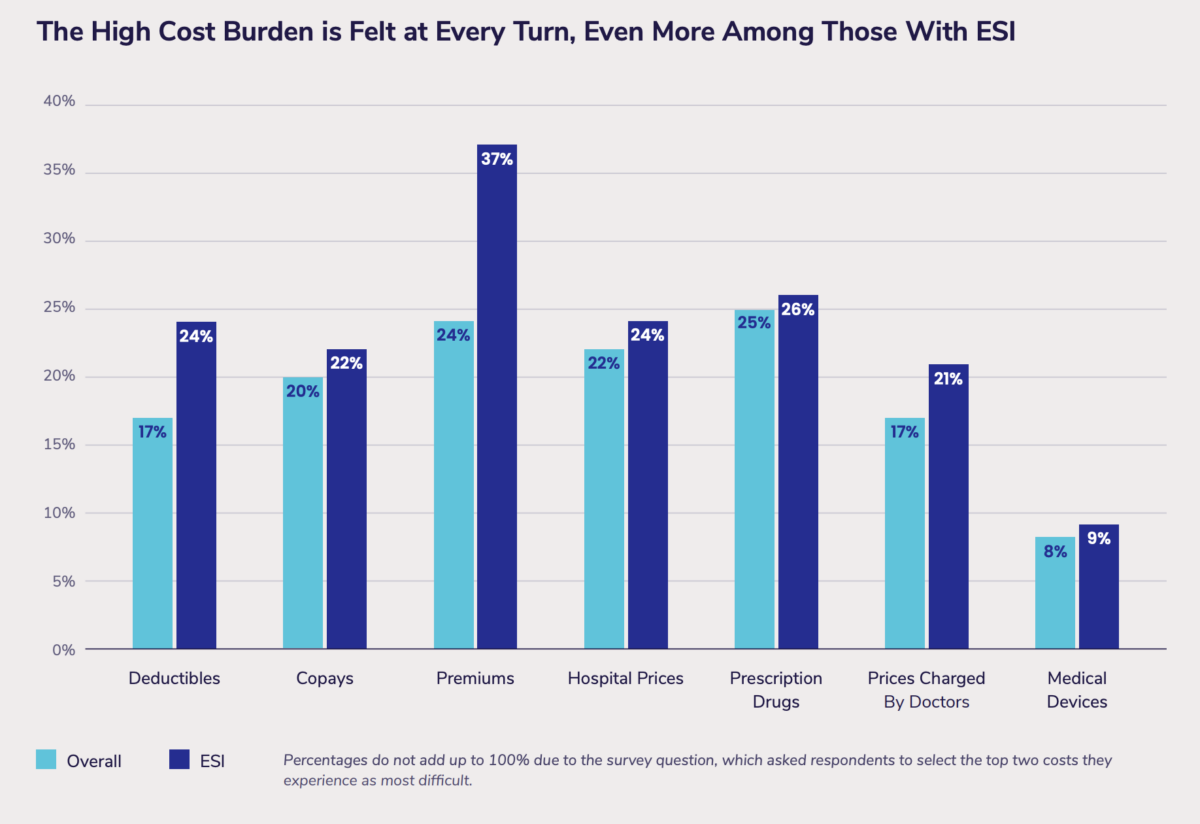
People perceive a health care system that is unaffordable and those perceptions are rooted in the realities of their experiences with high health care costs at nearly every interaction they have with the health care system. Across most aspects of the health care experience, people covered under ESI encounter the affordability crisis with more intensity than overall respondents.
There is a Widely Held View that Health Care is Unaffordable, Especially Among Those Covered by ESI
- 71% of respondents agree that health care costs are unaffordable for people and families
- Among respondents with ESI, 81% agree that health care is unaffordable
Even Among Those with ESI, The Medical Debt Burden Runs Deep and is Extensive
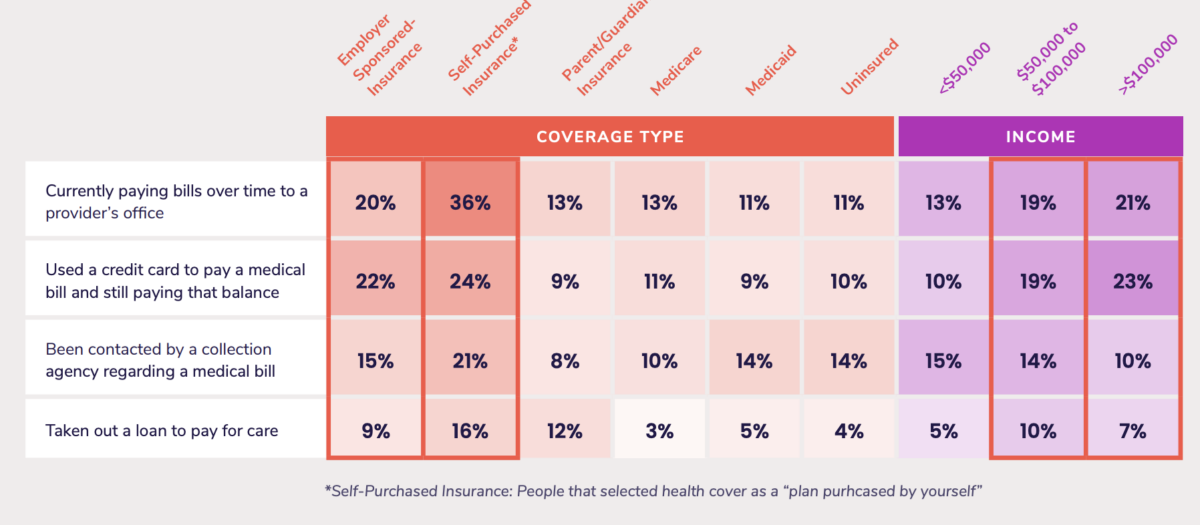
Health care costs continue to rise, and roughly one-third of people have made the anguishing decision to forego other daily expenses to keep up. This experience often crescendos into the crippling reality of medical debt and, sometimes, bankruptcy, even across income levels and coverage status. People with employer-sponsored insurance are, like peers in other coverage categories, caught in a hamsterwheel of rising health care costs and incurred debt to maintain access to care. However, as this survey shows, there is a prevalence of medical debt and a variety of ways people choose to manage it among those with ESI coverage.
How People Manage a Major Symptom of the Health Care Cost Burden – Medical Debt
- More than half of adults with ESI (53%) report experiencing at least one financial pressure related to a medical bill (i.e., contacted by a credit agency, took out a loan, etc.) in the past two years
- 21% of total respondents reported carrying medical debt, and people report many other financial pressures related to medical bills they can’t pay – highlighting that the financial impact of health care persists long after treatment ends.
The Burden of Medical Debt Hits Hard Overall, Almost Always More So Among People Covered by ESI
When Hit with Medical Bills They Can’t Pay, People Manage in Various Ways
People with Employer-Sponsored Insurance Seek Reforms & Believe It Is Up to Congress to Act
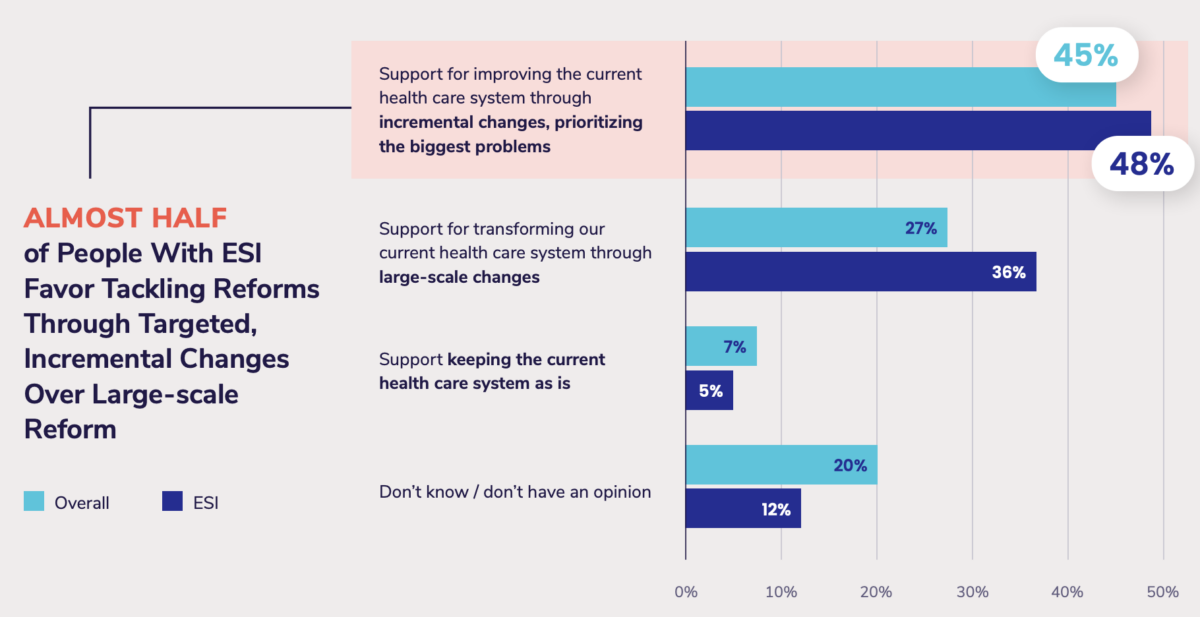
Policymakers on both sides of the aisle, federally and in states, acknowledge the growing pressure people face affording health care. Despite the myriad policy solutions pushed by advocates, industry, and other stakeholders over the years, reforms have yet to meaningfully survive the legislative, regulatory, and political processes to ultimately lower costs. For people covered by ESI, this survey shows a desire for reforms, a distrust of private health care companies to drive the solution, and a belief that Congress ought to act to lower health care costs for people.
Almost half of people with ESI favor tackling reforms through targeted, incremental changes over large-scale reform
People With Employers Coverage Desire Policy Change From Congress, Distrust Private Health Care Companies to Lower Costs Alone
- Over half of people (53%) with ESI distrust private health care companies to lower costs on their own
- 84% of people with ESI believe a candidate’s postion on addressing health care costs in important (48% agree it’s “very important”)
People with Employer-Sponsored Insurance Seek Reforms & Believe It Is Up to Congress to Act
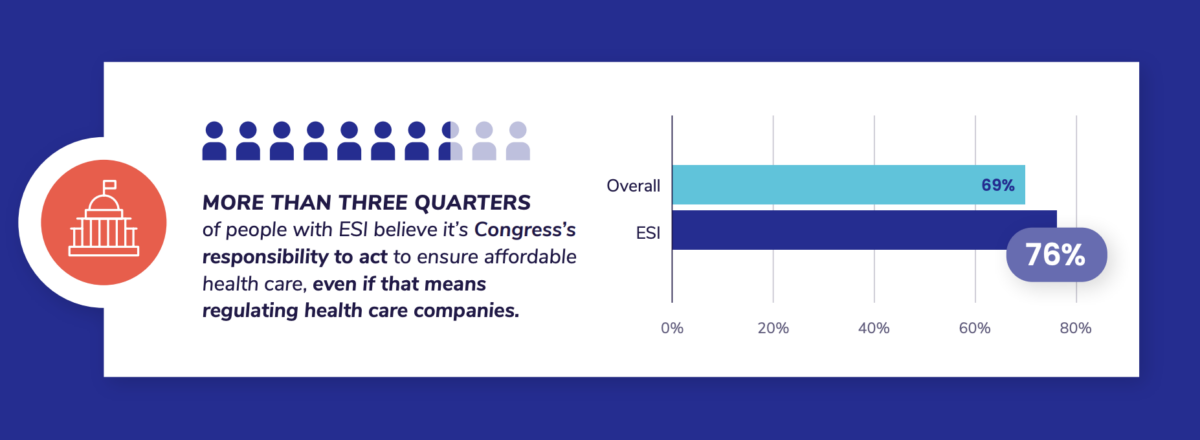
Policymakers on both sides of the aisle, federally and in states, acknowledge the growing pressure people face affording health care. Despite the myriad policy solutions pushed by advocates, industry, and other stakeholders over the years, reforms have yet to meaningfully survive the legislative, regulatory, and political processes to ultimately lower costs. For people covered by ESI, this survey shows a desire for reforms, a distrust of private health care companies to drive the solution, and a belief that Congress ought to act to lower health care costs for people.
Almost half of people with ESI favor tackling reforms through targeted, incremental changes over large-scale reform
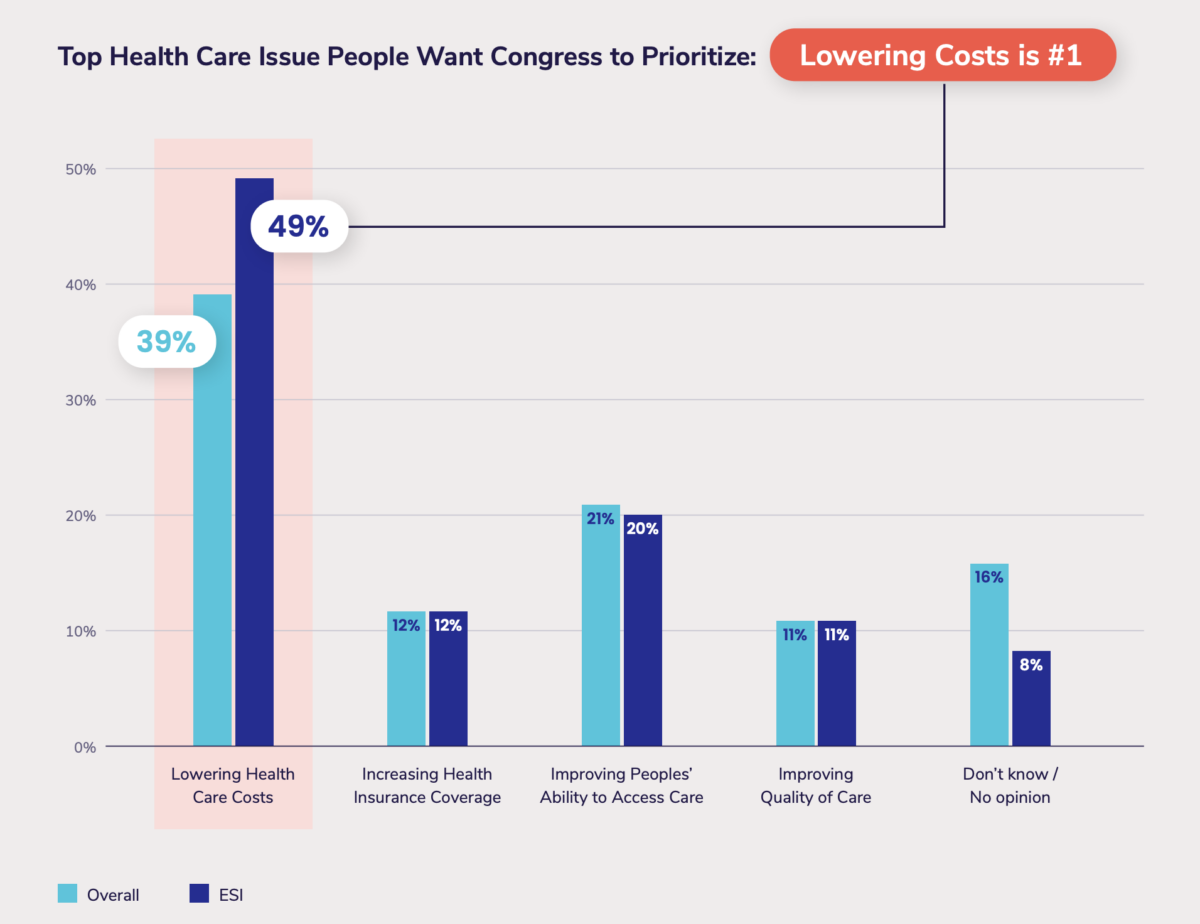
Public Opinion Research Shows Strong Support for Commonsense Policy Solutions to Lower Costs, Especially Among People Covered by ESI
Across Policy Solutions People Indicate Consistent Support for Policies to Lower the Cost of Health Care
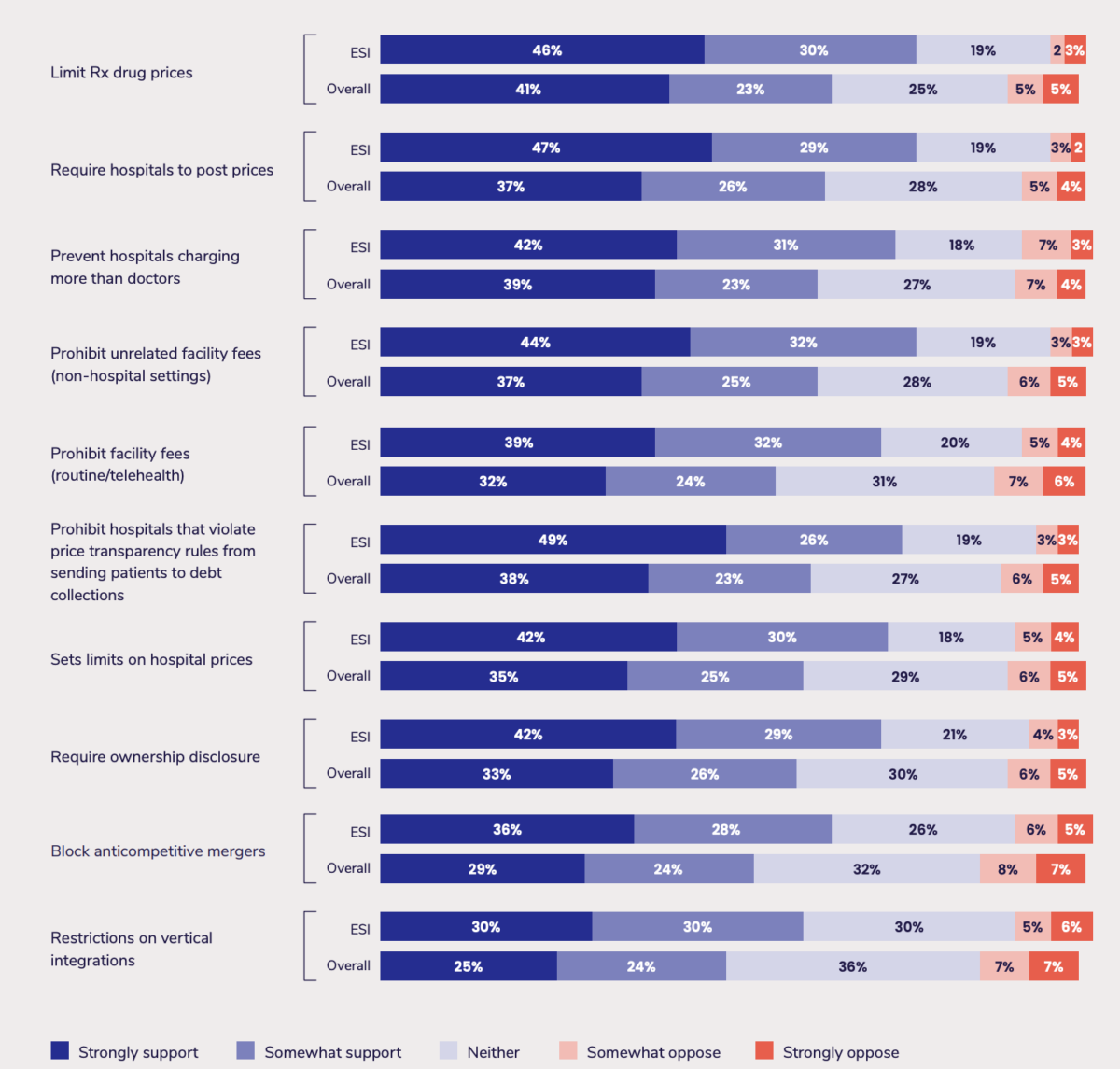
The Poll Results Are Clear: Policymakers Must Act to Lower Health Care Costs Within Employer-Sponsored Insurance
The cost of health care is unaffordable and people overwhelmingly want policymakers to take action. While this poll surveys a national sample, these sentiments are echoed at the state level as seen in recent polling we conducted in Maine, Minnesota, and North Carolina.
Keep Exploring Health Care Affordability
Affordability is at the center of how people experience the health care system. Explore our latest research, state and federal policy advocacy, and solutions to learn more about how we can make care more affordable for everyone.
How do everyday people experience health care affordability?
Hospital Consolidation, High Health Care Costs Burdening People and a Driving Desire for Congress to Act
The “One-Two Punch” of Unaffordable Health Care Costs and Medical Debt
About United States of Care Action
United States of Care Action is a nonpartisan nonprofit organization dedicated to advancing health care reforms at the state and federal levels for everyday people. Our policy solutions are based on qualitative and quantitative research, listening to real people’s needs across the country, translating those needs into policy, and then advocating for reforms that deliver on what people seek from the system.
Stay up to date!
Sign up to receive the latest news, resources and updates on building a better health care system.