Affordability, Hospital Pricing, Listening Work, News & Updates, Research
Unaffordable Health Care Costs and Devastating Medical Debt
FACT SHEET: PUBLIC OPINION POLL
Consistently across our listening research, it is evident that there is an affordability crisis in health care. Year after year, health care costs continue to rise, and roughly one-third of people have made the anguishing decision to forego other daily expenses to keep up. This is reinforced in a new poll commissioned by United States of Care Action. The results of this poll highlight the ways in which people continue to be burdened by high health care costs and how high costs are driving their experiences with medical debt. Understanding the depth of people’s experiences with medical debt can help inform broader reforms to the health care system overall.
The “One-Two Punch”
Years-long public opinion research by United States of Care (USofCare) demonstrates consistent and overwhelming struggles that everyday people have affording the health care they need. Too often these affordability struggles result in the devastating reality of medical debt. Year after year, health care costs continue to rise, and roughly one-third of people have made the anguishing decision to forego other daily expenses to keep up. This experience often crescendos into the crippling reality of medical debt and, sometimes, bankruptcy, even across income levels and coverage status. Caught in a hamsterwheel of rising health care costs and incurred debt to maintain access to care, it is no wonder that research shows deep mistrust of the health care industry.
In the absence of federal action, several states are taking aim at policies to protect people from medical debt. As Congress considers ways to improve health care affordability, state actions on medical debt protection can provide policy options to address this part of the affordability crisis. Additionally, understanding the depth of people’s experiences with medical debt can help inform broader reforms to the health care system overall.
With the goal of understanding the depth of these experiences, United States of Care Action commissioned Morning Consult to conduct a poll between April 6-April 7, 2026 among a sample of 2,001 adults (margin of error +/- 2%). Key takeaways from this poll reveals that:
- Health Care Affordability is Out of Reach: The burden of health care costs are extensive and run deep, even when accounting for coverage type. These cost burdens hit people as they obtain and maintain health coverage, as well as when they need care.
- Medical Debt Burden and Experiences are Extensive: Regardless of coverage status and type and income level, people are shouldering medical debt that is driving them to manage their medical debt in a variety of ways.
- People Desire Policymakers to Address the Cost Burden, and Distrust Industry: Across demographics, people are looking to policymakers for reforms and solutions that will alleviate their affordability concerns; and people don’t trust private health care companies to lower costs on their own.
- People Want Congress to Prioritize Lowering Costs: More so than improving access to care (21%), increasing insurance coverage (12%), or improving quality (11%), people view lowering health care costs (39%) as the top priority for Congressional action.
Health Care Affordability is Out of Reach
The Burden of Health Care Costs
There is a widely held view that health care is unaffordable.
71% of respondents agree that health care costs are unaffordable for people and families.
The High Cost Burden is Felt at Every Turn, Regardless of Coverage Type
Top Health Care Costs with the Biggest Financial Impact on People
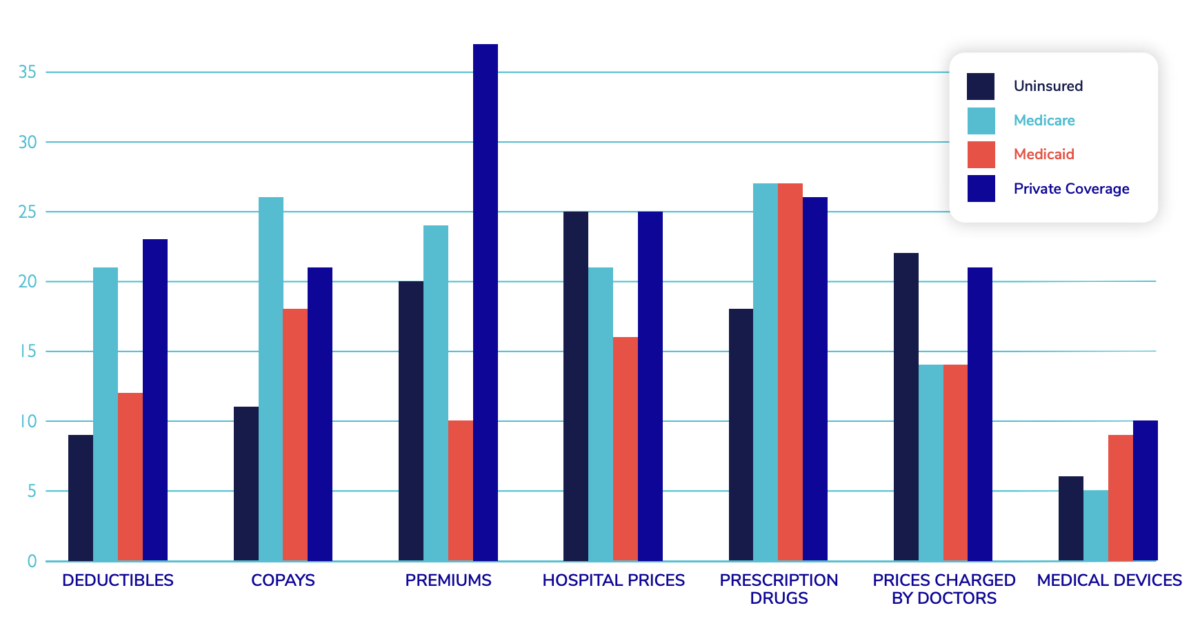
Percentages do not add up to 100% due to the survey question, which asked respondents to select the top two costs they experience as most difficult.
Medical Debt Burden Runs Deep And Is Expensive
How people manage a major sympton of the health care cost burden – medical debt.
49%
Nearly half of adults (49%) report experiencing at least one financial pressure related to a medical bill (i.e. contacted by a credit agency, took out a loan, etc.) in the past two years
25% of people earning less than $50K annually have medical debt.
17% of people earning $50k-$100K annually have medical debt.
14% of people earning $100K or more annually have medical debt.
Insurance Breakdown
- 21% of insured people have medical debt
- 23% of uninsured people have medical debt
21% of total respondents reported carrying medical debt, and people report many other financial pressures related to medical bills they can’t pay – highlighting that the financial impact of health care persists long after treatment ends.
When Hit with Medical Bills People Can’t Pay, People Manage in Various Ways
Top Health Care Costs with the Biggest Financial Impact on People
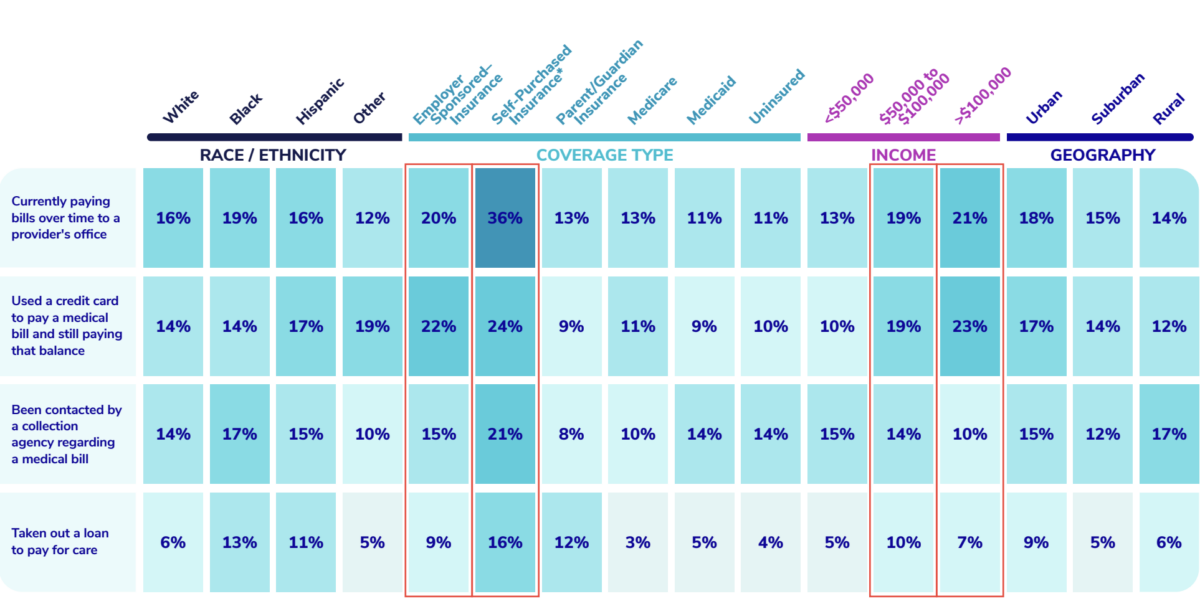
*Self-Purchased Insurance: People that selected health cover as a “plan purhcased by yourself”
People Want Policymakers To Prioritize Health Care Costs & Distrust Industry To Self-Regulate Prices
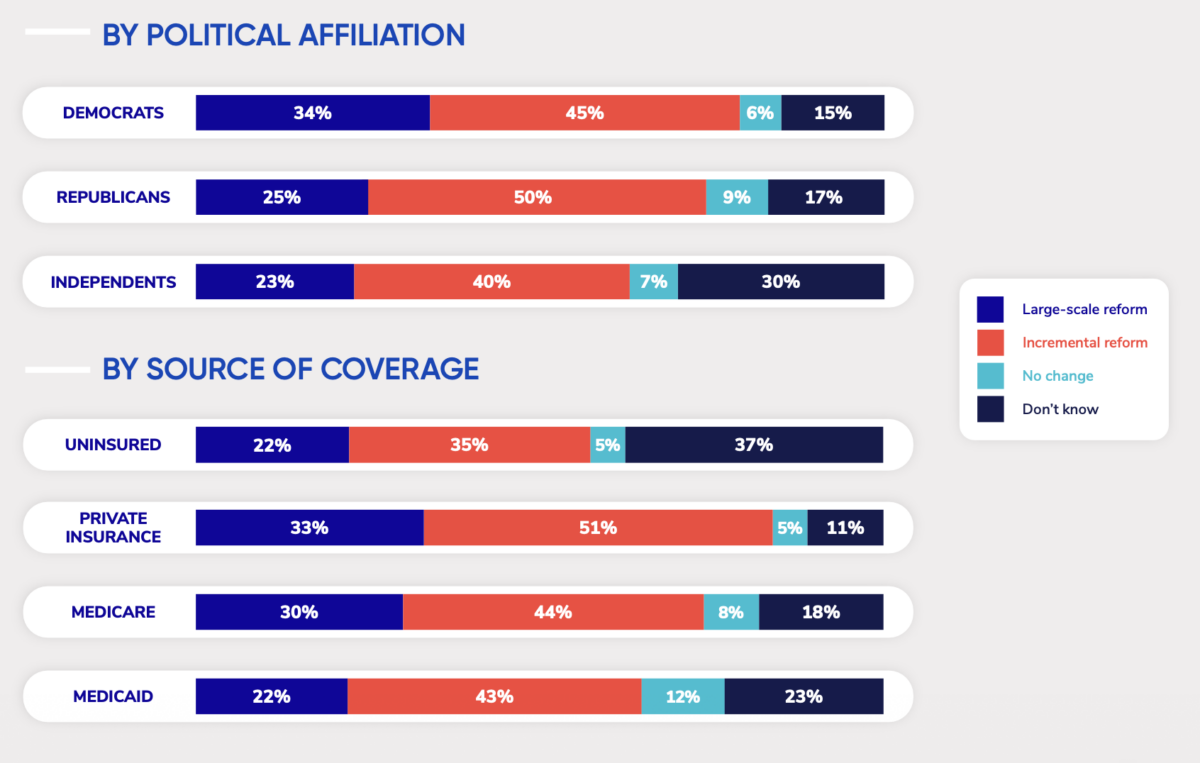
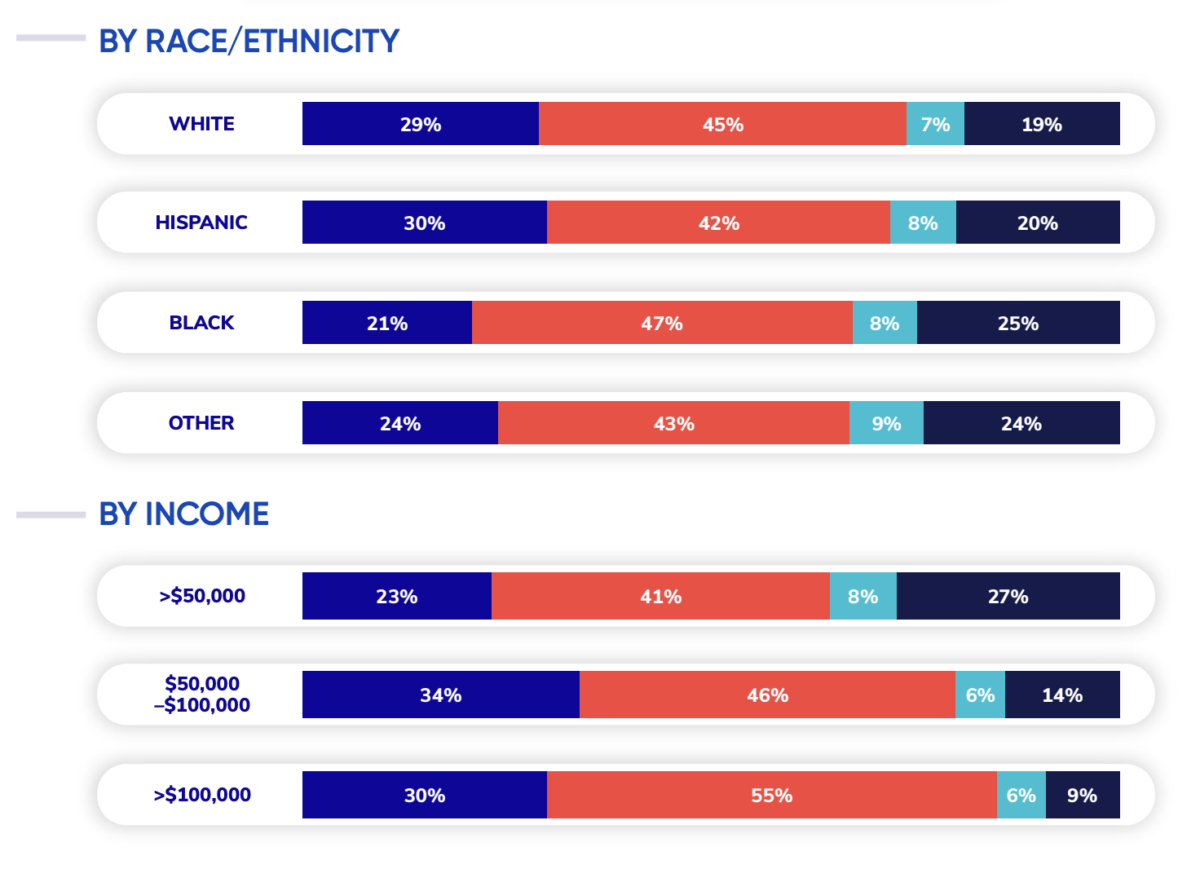
A majority of people seek reforms to lower costs. Almost half of people favor tackling reforms through targeted, incremental changes over large-scale reform.
- 45% of people support improving the current health care system through incremental changes, prioritizing the biggest problems
- 27% of people support transforming our current health care system through large-scale changes
- 20% of people don’t know or don’t have an opinion
- 7% of people support keeping the current health care system as is
Over Half (53%) of People Distrust Private Health Care Companies To Lower Costs On Their Own
By Political Affiliation:
- 55% Democrats
- 52% Independents
- 52% Republicans
By Income:
- 52% of people who indentified earning less than $50K annually
- 53% of people who indentified earning between $50K and $100K annually
- 55% of people who indentified earning more than $100K annually
Across Political Affiliations, a Majority of People Will Prioritize Candidates’ Views on Health Care Costs in the Midterm Election
76% of people believe a candidate’s position on health care costs is important in deciding who they vote for in the midterm elections.
By party:
- 85% Democrats
- 79% Republicans
- 64% Independents
84%*of people with employer-sponsored insurance believe a candidate’s position on addressing health care costs is important.
(48% agree it’s “very important”)
57%of people who are uninsured believe a candidate’s position on health costs is important when voting in the midterms.
Lowering Health Care Costs Tops The List of Issues People Want Congress to Prioritize
Poll results show broad support for numerous policy solutions to lower costs and protect people from medical debt.
The Top Health Care Issue People Want Congress to Prioritize: Lowering Health Care Costs is #1
- 39% Lowering health care costs
- 21% Improving Access to Care
- 12% Increasing Insurance Coverage
- 11% Improving Quality
- 16% Don’t Know or No Opinion
A Majority of People Want Congressional Action to Regulate Health Care Companies
People agree that Congress should act to ensure affordable health care, even if that means regulating health care companies.
- 69% agree (42% strongly agree)
- 22% neither agree or disagree
- 9% disagree
Across Political Affiliations, People Agree Congress Should Act:
- 81% identify as Democrat
- 66% identify as Republican
- 59% identify as Independent
Across Policy Solutions, People Indicate Consistent Support for Policies to Lower the Health Care Costs
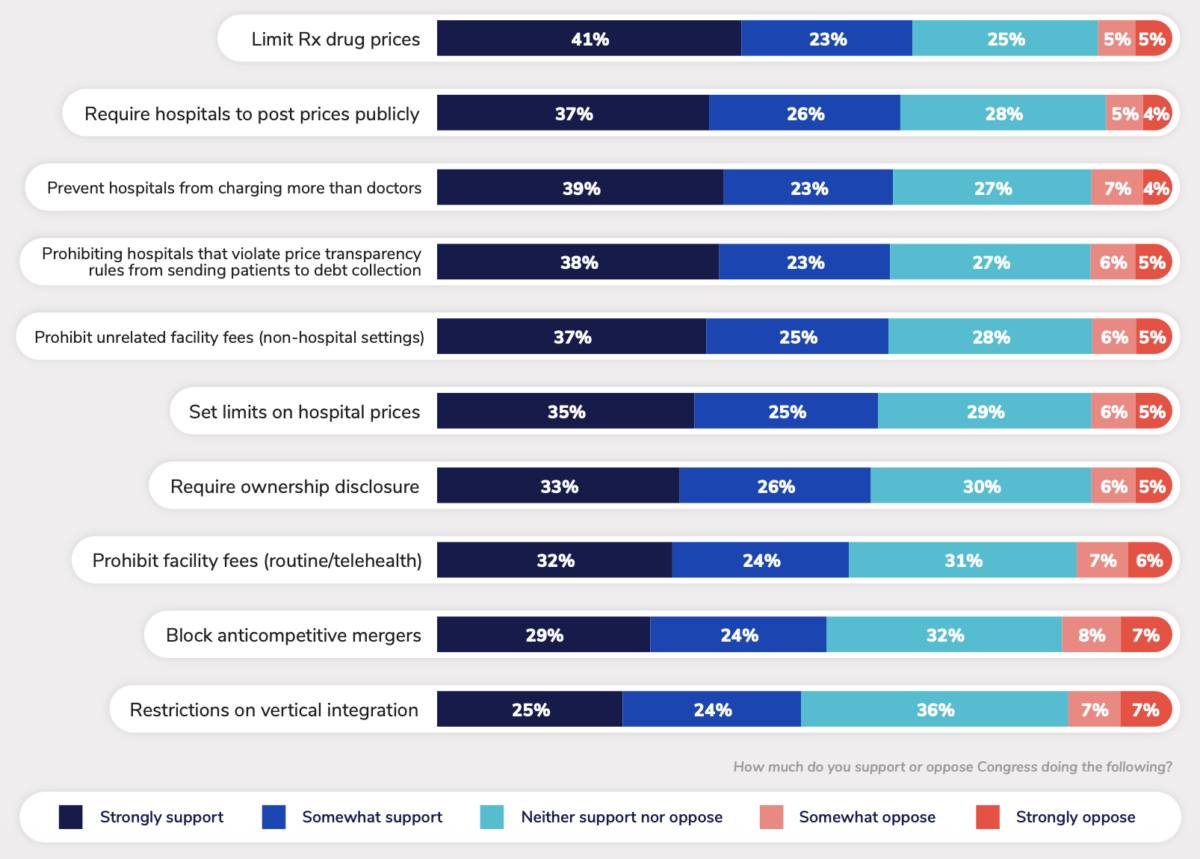
Our Poll Results Are Clear: Policymakers Must Act to Lower Health Care Costs For People
The cost of health care is unaffordable and people overwhelmingly want policymakers to take action. While this poll surveys a national sample, these sentiments are echoed at the state level as seen in recent polling we conducted in Maine, Minnesota, and North Carolina.
In short, these poll results:
- Show the deep challenges that people face with affording their health care in every aspect of the health care system – inclusive of premiums, copays, deductibles, prescription drug prices, and hospital prices.
- Give lawmakers assurance that there is overwhelming bipartisan support for policies that deliver on people’s desire for the relief from financial hardship and stress caused by the health care system.
- Underscore how highly people are prioritizing candidates’ support for addressing health care costs as they consider who to vote for in upcoming midterm elections.
- Reinforce previous findings revealing deep mistrust with the health care system, particularly of private industry actors, and people’s expectation that lawmakers take action to regulate prices and industry behaviors to lower costs.
- Demonstrate that the vast majority of people believe the status quo is unacceptable and desire targeted, incremental reforms that tackle their pain points with the health care system rather than advancing major reforms that overhaul the larger system.
- Offer a variety of policy solutions that Congress can take up now to make meaningful progress toward addressing affordability for people.
FACT SHEET: PUBLIC OPINION POLL – The “One-Two Punch” of Unaffordable Health Care Costs and Devastating Medical Debt
Keep Exploring Health Care Affordability
Affordability is at the center of how people experience the health care system. Explore our latest research, state and federal policy advocacy, and solutions to learn more about how we can make care more affordable for everyone.
How do everyday people experience health care affordability?
Hospital Consolidation, High Health Care Costs Burdening People and a Driving Desire for Congress to Act
When Employer Sponsored Insurance (ESI) Isn’t Enough
About United States of Care Action
United States of Care Action is a nonpartisan nonprofit organization dedicated to advancing health care reforms at the state and federal levels for everyday people. Our policy solutions are based on qualitative and quantitative research, listening to real people’s needs across the country, translating those needs into policy, and then advocating for reforms that deliver on what people seek from the system.