Affordability, Hospital Pricing, Listening Work, News & Updates, Research, Resources
Public Opinion Poll
Affordable Health Care is Out of Reach For People
Consistently across our listening research, it is evident that there is an affordability crisis in health care. This is reinforced in a new poll commissioned by United States of Care Action in April 2026. This poll asks about people’s lived experiences with affordability and costs and how these experiences shape their views on policies to improve the health care system. The results of this poll highlight the ways in which people continue to be burdened by high health care costs and how that is driving their demand for Congress to address this problem.
People Nationwide Feel that Health Care is Unaffordable, Burdening them Into Medical Debt and Sowing Distrust for Industry Setting High Pricing
Policymakers are focused on affordability in health care, but what does the term “affordability” mean to people? How do everyday people currently experience affording – and being unable to afford – their health care? Who do people expect that health care costs be addressed? And what is the role of policymakers?
With these questions at hand, United States of Care Action commissioned Morning Consult to conduct a poll between April 6-April 7, 2026 among a sample of 2,001 adults (margin of error +/- 2%). These results contribute to USofCare’s years-long deep listening research and insights on people and lived experiences with affordability and costs. Overall takeaways from this poll reflect that:
- Health Care Costs are Unaffordable & Affordability Challenges are Widespread. People perceive a health care system that is unaffordable and those perceptions are rooted in the realities of their experiences with high health care costs.
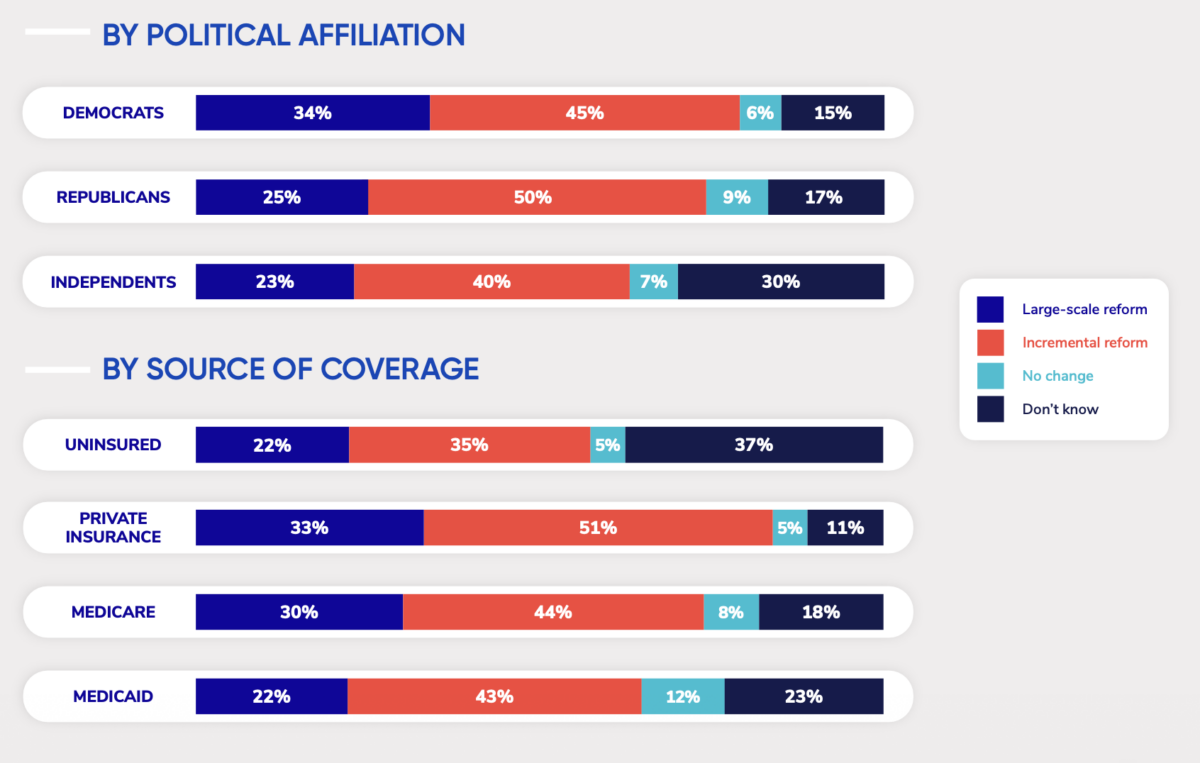
- People Demand Change; Prefer Targeted, Incremental Reforms over Large-Scale Changes. With health care costs in the background, nearly half (43%) of respondents prefer incremental reforms that address the biggest pain points with the health care system rather than transforming the current health care system through large-scale changes.
- People Do Not Trust the Health Care Industry to Reign in Health Care Costs. People want Congress to take action, and do not trust that costs will get better by allowing private health care companies to control costs on their own.
- There is Broad Bipartisan Support for Policies to Drive Down the Cost of Health Care. When considering actions that Congress and policymakers can take, people expressed widespread, bipartisan support for a number of specific policies to lower the cost of health care for people.
HOW PEOPLE EXPERIENCE & DEFINE HEALTH CARE AFFORDABILITY
Respondents revealed clear, widespread concerns that point to a health care cost affordability crisis. Those sentiments are deep and extensive, revealing that people are struggling with costs in two significant ways:
- The high cost of obtaining health coverage, and
- The high costs associated with receiving care
The below findings illustrate various aspects of how people experience and perceive health care affordability.
71% of respondents agree that health care costs are unaffordable for people and families.
21% of adults have bills that are past due or bills they are unable to pay.
49% of adults
report experiencing at least one financial pressure related to a medical bill (i.e. contacted by a credit agency, took out a loan,
etc.) in the past two years.
Among the 21% of people who have medical debt or unpaid medical bills:
25% of people earning less than $50k annually have medical debt.
17% of people earning $50k – $100k annually have medical debt.
14% of people earning $100k or more annually have medical debt.
Insurance Breakdown
- 21% of insured people have medical debt
- 23% of uninsured people have medical debt
The High Cost Burden is Felt at Every Turn, Regardless of Coverage Type
Top Health Care Costs with the Biggest Financial Impact on People
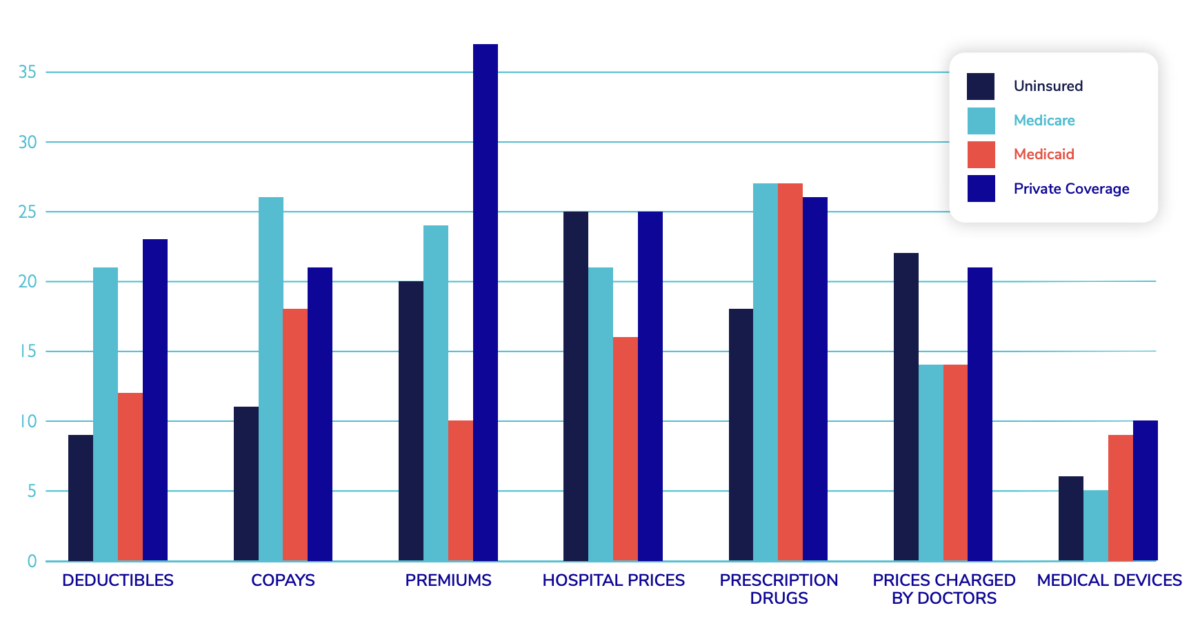
Percentages do not add up to 100% due to the survey question, which asked respondents to select the top two costs they experience as most difficult.
PEOPLE FAVOR TARGETED REFORMS TO THE HEALTH CARE SYSTEM.
People Do Not Trust Private Industry to Address High Costs
Consistent with previous (mis)trust insights United States of Care (USofCare) gathered about people’s trust of the health care system, this poll validates the lack of confidence people have that private industry actors will reign in costs on their own. High health care costs are central as people consider reforms, how they think the system currently favors corporations over patients, and the level of importance people place on a candidate’s position on health care costs as they enter the voting booth this November.
Almost Half of People Favor Tackling Reforms through Targeted, Incremental Changes Over Large-Scale Reform
- 45% of people support improving the current health care system through incremental changes, prioritizing the biggest problems
- 27% of people support transforming our current health care system through large-scale changes
- 20% of people don’t know or don’t have an opinion
- 7% of people support keeping the current health care system as is
53% of people don’t trust private health care companies to regulate health care costs on their own.
Across Political Affiliations, a Majority of People Will Prioritize Candidates’ Views on Health Care Costs in the Midterm Election
76% of people believe a candidate’s position on health care costs is important in deciding who they vote for in the midterm elections.
By party:
- 85% Democrats
- 79% Republicans
- 64% Independents
84%*of people with employer-sponsored insurance believe a candidate’s position on addressing health care costs is important.
(48% agree it’s “very important”)
57%of people who are uninsured believe a candidate’s position on health costs is important when voting in the midterms.
Lowering Health Care Costs Tops The List of Issues People Want Congress to Prioritize
Consistent with previous USofCare polling on affordability, respondents to this survey indicate overwhelming support for congressional action to regulate health care companies, particularly when it comes to health care costs. Hospital spending continues to make up the largest share of total health care expenditures – outpacing spending on retail prescription drugs and physician services combined. The majority of respondents believe that hospitals are charging more than they need to be, reflecting their views on high hospital service spending rates.
The Top Health Care Issue People Congress to Prioritize: Lowering Health Care Costs is #1
- 39% Lowering health care costs
- 21% Improving Access to Care
- 12% Increasing Insurance Coverage
- 11% Improving Quality
- 16% Don’t Know or No Opinion
A Majority of People Want Congressional Action to Regulate Health Care Companies
People agree that Congress should act to ensure affordable health care, even if that means regulating health care companies.
- 69% agree (42% strongly agree)
- 22% neither agree or disagree
- 9% disagree
Across Political Affiliations, People Agree Congress Should Act:
- 81% identify as Democrat
- 66% identify as Republican
- 59% identify as Independent
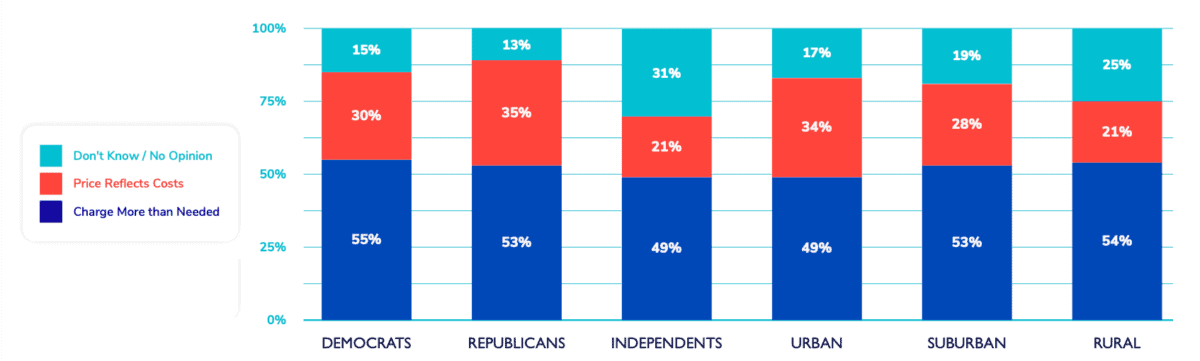
Across Political Affiliation and Geography, a Majority of People Believe Hospitals Charge Above What is Needed
53%
A majority of people (53%) believe hospitals charge more than they need to, a view that holds true across all political affiliations and geography. Conversely, only 29% believe hospital prices reflect their costs, and 20% don’t know or have no opinion.
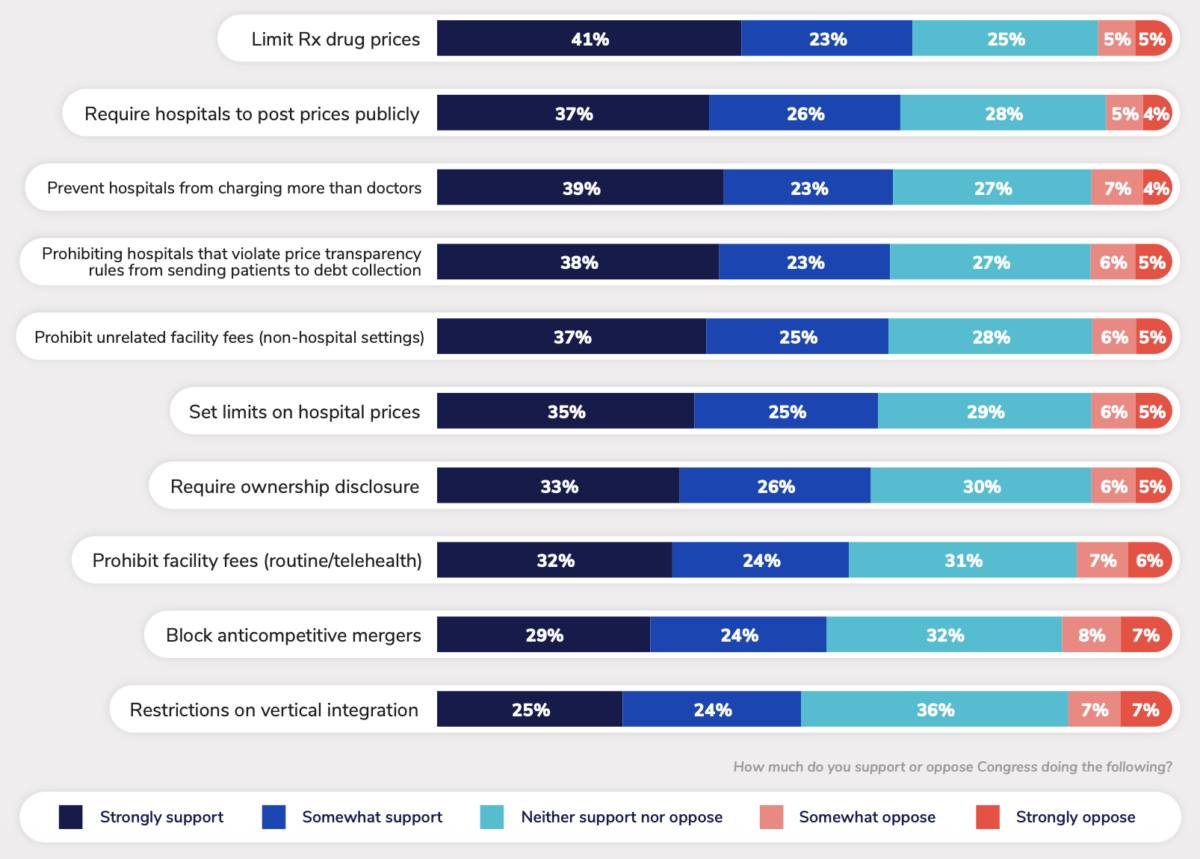
Across Policy Solutions, People Indicate Consistent Support for Policies to Lower the Health Care Costs
Our Poll Results Are Clear: Policymakers Must Act to Lower Health Care Costs For People
The cost of health care is unaffordable and people overwhelmingly want policymakers to take action. While this poll surveys a national sample, these sentiments are echoed at the state level as seen in recent polling we conducted in Maine, Minnesota, and North Carolina.
In short, these poll results:
- Show the deep challenges that people face with affording their health care in every aspect of the health care system – inclusive of premiums, copays, deductibles, prescription drug prices, and hospital prices.
- Give lawmakers assurance that there is overwhelming bipartisan support for policies that deliver on people’s desire for the relief from financial hardship and stress caused by the health care system.
- Underscore how highly people are prioritizing candidates’ support for addressing health care costs as they consider who to vote for in upcoming midterm elections.
- Reinforce previous findings revealing deep mistrust with the health care system, particularly of private industry actors, and people’s expectation that lawmakers take action to regulate prices and industry behaviors to lower costs.
- Demonstrate that the vast majority of people believe the status quo is unacceptable and desire targeted, incremental reforms that tackle their pain points with the health care system rather than advancing major reforms that overhaul the larger system.
- Offer a variety of policy solutions that Congress can take up now to make meaningful progress toward addressing affordability for people.
Keep Exploring Health Care Affordability
Affordability is at the center of how people experience the health care system. Explore our latest research, state and federal policy advocacy, and solutions to learn more about how we can make care more affordable for everyone.
The Perfect Pricing Storm: Hospital Consolidation & High Health Care Costs
The “One-Two Punch” of Unaffordable Health Care Costs and Devastating Medical Debt
When Employer Sponsored Insurance (ESI) Isn’t Enough
About United States of Care Action
United States of Care Action is a nonpartisan nonprofit organization dedicated to advancing health care reforms at the state and federal levels for everyday people. Our policy solutions are based on qualitative and quantitative research, listening to real people’s needs across the country, translating those needs into policy, and then advocating for reforms that deliver on what people seek from the system.
Stay up to date!
Sign up to receive the latest news, resources and updates on building a better health care system.